Our Research in More Detail
The SYNC-ADHD study is exploring how brain stimulation could support attention and mental effort in young adults with ADHD. ADHD is often linked to difficulties in staying focused, managing impulses, and maintaining motivation. These challenges are partly related to cognitive control, the brain’s ability to guide behaviour toward goals. In ADHD, cognitive control can be affected, and our study aims to better understand, and potentially influence, the patterns of brain activity that support it.
Research shows that certain patterns of brain activity, particularly in the frontal part of the brain, are associated with attention and mental effort. In ADHD, these activity patterns may differ from those seen in people without the condition, and such differences could contribute to differences in attention and behaviour. By using repetitive brain stimulation, we aim to investigate whether this approach can promote more stable brain activity patterns, and, in turn, help improve consistency in attention and behaviour in people with ADHD.
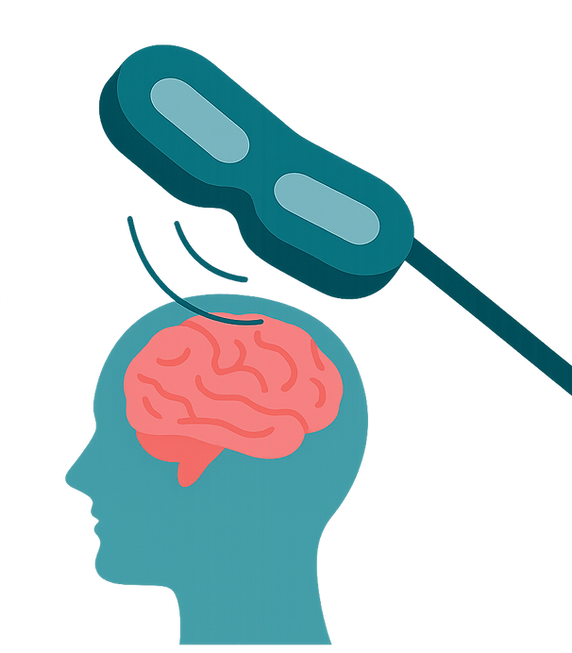
To do this, we use a non-invasive method called repetitive transcranial magnetic stimulation (rTMS). This technique uses gentle magnetic pulses to interact with brain activity in a targeted and rhythmic way. In the SYNC-ADHD study, we are applying rTMS to influence theta rhythms in the frontal brain regions while participants complete attention tasks. This allows us to assess whether stimulation is linked to more stable performance and behaviour over time.
We want this research to be shaped by the people it’s meant to benefit. That’s why we’re creating a Patient and Public Involvement and Engagement (PPIE) group to advise the study. Lived experience is vital: young adults with ADHD know best what challenges and priorities matter most. By involving them, we aim to improve the clarity and accessibility of our study materials, identify practical or emotional barriers to participation, and shape how we share our results. Listening to diverse voices makes our science stronger, more inclusive, and more relevant to real-world needs.
Who Are We?
We’re a multidisciplinary team based at King’s College University in partnership with the Pears Maudsley Clinical Research Facility and the South London and Maudsley hospital, funded by the Medical Research Council. Our expertise includes clinical neuroscience, ADHD epidemiology, neuromodulation methods, and patient engagement.

What is the SYNC-ADHD Study?
The SYNC-ADHD study is exploring how brain stimulation could support attention and self-control in young adults with ADHD.
Why Focus on Brain Rhythms?
By using rhythmic brain stimulation, we aim to test whether we can help re-align disrupted brain rhythms and improve consistency in attention and behaviour.
How Are We Testing This?
We use a non-invasive method called rhythmic transcranial magnetic stimulation (rhTMS).
Why Public Involvement Matters
We want this research to be shaped by the people it’s meant to benefit. That’s why we’re creating a Patient and Public Involvement and Engagement (PPIE) group to advise the study.
Our Research Mission
SYNC-ADHD is dedicated to investigating the effectiveness of Transcranial Magnetic Stimulation (TMS) in improving attention and reducing symptoms in young adults with ADHD. Our goal is to explore this technique as a potential alternative to current ADHD treatments.
What is the SYNC-ADHD Study?
The SYNC-ADHD study is exploring how brain stimulation could support attention and self-control in young adults with ADHD.
Why Focus on Brain Rhythms?
By using repetitive brain stimulation, we aim to explore whether this approach can support healthier brain activity patterns and enhance consistency in attention and behaviour.
How Are We Testing This?
We use a non-invasive method called repetitive transcranial magnetic stimulation (rTMS).
Why Public Involvement Matters
We want this research to be shaped by the people it’s meant to benefit. That’s why we’re creating a Patient and Public Involvement and Engagement (PPIE) group to advise the study.
Research Focus
Meet Our Dedicated Team
Our team of experts is committed to advancing ADHD research and improving the lives of individuals affected by ADHD.

Prof Gráinne McLoughlin

Prof Katya Rubia

Dr Máté Gyurkovics

Dr Luke Mason

Dr Jason Palmer

Eve Bolland

Nathan Orourke
